Group Fitness Class or Solo Workout: Choose the Setting That Fits
Choose a group fitness class or solo workout by comparing instruction, social energy, and pace, then try a low-pressure session that fits your preferences.
The common mistake when choosing a group fitness class or solo workout is deciding based on what seems more disciplined. That can cost you a session you would have enjoyed: a lively class may feel rushed, while an independent workout may leave you unsure what to do next. Compare how each setting handles instruction, social energy, and pace before committing.
What do you want the setting to do for you?
Start with the part of exercise that most often gets in your way. Do you lose momentum when you have to choose each activity? Do you find a room full of people distracting? Would you rather follow an instructor’s cues, or pause and adjust without feeling out of step?
Write down one practical preference for each of these areas:
- Structure: Do you want someone else to organize the session, or do you like choosing what comes next?
- Social energy: Do other people help you feel engaged, or do you focus better on your own?
- Pace: Do you prefer a shared rhythm, or the freedom to stop, slow down, or change activities?
These are not personality labels. A person may enjoy a group class for dance and prefer a solo session for strength work. Your choice can depend on the activity, the day, or how much attention you want to give to planning.
How much structure will help you start?
A group class typically supplies a sequence, a start and finish, and an instructor who gives cues. That can be useful if selecting movements feels like another task, or if you want to arrive and follow along. The instructor’s guidance may also make a class easier to enter when you are unfamiliar with its format, though the amount of individual coaching varies.
A solo session gives you more say over the order and content. You might follow a routine from a fitness app, use a printed plan, or choose a few activities you already know. This control can suit someone who likes a quiet, self-directed session. It also means you are responsible for having a workable plan and deciding when to change it.
Consider what happens when the plan meets an ordinary interruption. In a class, the instructor usually continues the sequence while you decide whether to rejoin. Alone, you can pause for a phone call or change your order, but you must choose how to resume. Neither format removes the need to make choices; each places them in a different part of the session.
Does a shared room energize or distract you?
Classmates can create a sense of occasion. Music, a shared rhythm, and visible participation may make the session feel more engaging. If you enjoy doing an activity alongside others, that atmosphere can help you stay attentive to the class.
The same room can also compete for your attention. A crowded space, a loud soundtrack, or worry about keeping up may make it harder to concentrate. You do not have to be outgoing to attend a class, and you do not have to dislike people to prefer training alone. Focus on the experience of the room rather than assumptions about who belongs there.
Solo sessions remove the group’s pace and presence, but they need not mean exercising in isolation. You could work out at home with a video, use a quiet corner at a community center, or meet a friend and do separate routines. Choose the social level that supports attention rather than treating “group” and “alone” as the only options.
Which setting lets you control the pace?
In a class, the instructor sets a common sequence and timing. You can often adapt an activity, take a break, or skip a movement, but the session continues around you. That shared rhythm may keep a person moving through a planned class; it may feel limiting if you need frequent pauses or want to spend longer on one part.
Solo practice makes it easier to set your own tempo. You can repeat a familiar movement, rest when needed, or stop an activity that does not feel right. That flexibility is useful only if you are comfortable making those decisions. If you tend to drift between activities, a written plan or a timer may provide a little structure without taking control away.
For any activity, follow the instructor’s or equipment manufacturer’s directions and adapt to your abilities. If pain, a health condition, or uncertainty about safe participation is a concern, ask a qualified health professional for guidance before choosing a format or activity.
How do you compare a class with a solo session?
Use a small, low-pressure trial rather than trying to predict how you will feel from a class description alone. Check the format and location first: a studio’s class page may describe whether equipment is supplied, while a recreation center may list a drop-in or introductory session. For a solo option, decide where you will exercise and what activity you will follow.
- Pick one activity. Compare like with like, such as a beginner dance class and a short dance session at home, rather than comparing unrelated workouts.
- Choose a manageable first session. Select a class labeled for newcomers or a solo routine you can follow without improvising unfamiliar movements.
- Check the practical details. Note the class’s arrival instructions and what to bring, or gather the space and materials your solo plan requires.
- Decide what you will observe. Notice whether the amount of guidance, the social atmosphere, and the pace help you focus or pull your attention away.
- Afterward, record one useful adjustment. You might prefer a quieter class, a simpler solo plan, or more room to pause. Use that observation to choose the next session.
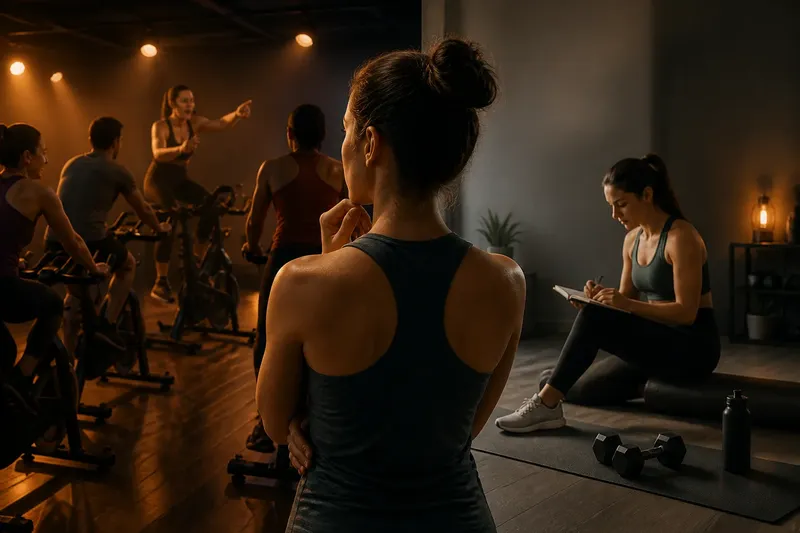
Say you are curious about indoor cycling but unsure about being in a group. You could first attend an introductory class and notice whether the instructor’s cues and shared rhythm help you settle in; if the fixed pace feels distracting, your next choice might be a self-directed session on a stationary bike where you control when to pause. The point is to compare your experience, not to prove that one setting is better.
What should you ask before choosing a group fitness class?
Can I take a break or modify a movement?
Ask the instructor or check the class information before joining. Knowing how modifications and pauses are handled can help you decide whether the shared pace feels workable.
Is the class designed for beginners?
Look for a description of the intended experience, not just the activity name. If the details are unclear, contact the facility and ask what a new participant should expect.
What should I bring or prepare?
Check the venue’s instructions for clothing, equipment, and arrival procedures. Requirements can vary by facility and class, so use its current guidance rather than guessing.
What can I do if I arrive feeling out of place?
Let the instructor know you are new and ask where to stand or set up. You can also choose a less crowded area if the room allows it, or leave and try a different format if the setting does not suit you.
How can you choose again after the first try?
After a session, consider three questions: Did the structure help me begin? Did the social setting support my attention? Could I adjust the pace in a way that felt comfortable? A simple note in your phone is enough. Record what worked and one change you would make; avoid judging the session only by whether it felt effortless.
If the class was enjoyable but too fast, look for an introductory option or ask about modifications. If your solo session felt aimless, try a routine with a clear sequence before deciding that independent exercise is not for you. If both settings appeal to you, use each for a different purpose rather than forcing a permanent choice.
The best group fitness class or solo workout is the one whose structure, social energy, and pace fit the session you are ready to do. Revisit the choice when your preferences or circumstances change; you can keep the activity and change the setting, or keep the setting and choose a different activity.